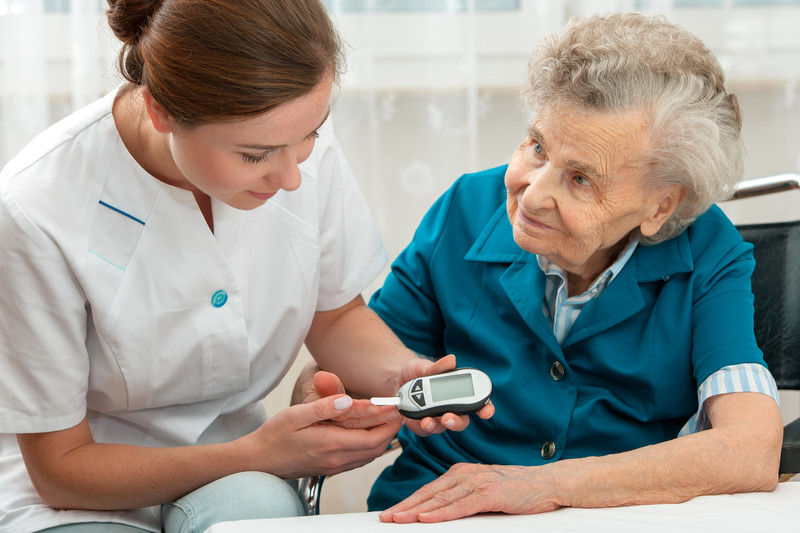


It can be scary to get a diagnosis of diabetes, especially if you’re a senior and already have other health issues and concerns. Your health care provider may prescribe a combination of diet, exercise, and medications to help you manage this new diagnosis of diabetes. Your health care team will look at all of your health issues and help create a personalized plan just for you. If your doctor has not already suggested it, request to see a certified diabetes educator (CDE) to learn about all about self-management.
Here are some tips to help you self-manage your diabetes:
Blood Sugar Log
Tracking your blood sugars using the memory on your meter or in a written diary is the first step in managing your diabetes. Talk with your doctor about getting your own home blood glucose meter. Meters are simple to use and often free with a prescription. When you meet with your CDE they will teach you how to operate your meter, track your blood sugar levels and how to use your results to manage your diabetes.
All about Nutrition
Learning appropriate portion sizes and how different foods affect your blood sugar is a super important step in managing diabetes. Learning which foods are appropriate daily choices and which foods you should leave for a special occasion or treat is also good to know. Seeing a nutritionist can help you create meal plan. They will also give you a food guide for diabetes which will outline eating more lean meats, fruits and vegetables, whole grains. A nutritionist will also show you simple ways to incorporate good fats into your diet, how to shop at the grocery store and read those confusing labels on food and so much more.
Physical Activity
Exercising drastically affects blood sugar and insulin levels. Work with your diabetes care team to develop an exercise and activity program to meet your personal and healthcare needs. Even a 30 minute walk a day can help.
Yearly Eye Exam
We all want want to keep our vision healthy, but for those with diabetes it’s even more important to keep up with those yearly dilated eye exam and retinal images. Diabetes can damage the small blood vessels in your retina or in the back of your eye, so those yearly appointments are crucial to keeping your eyes as healthy as possible.
Kidney Check
Your doctor will want to perform a simple yearly urine and blood test to make sure that diabetes is not affecting your kidneys.
Flu Shot
Diabetes can put you at higher risk of getting the flu. Be sure to get your flu shot every year. Also, talk to your doctor about the pneumonia vaccine if you haven’t already received one. Usually this shot is given once a lifetime, but some doctors give a booster after five years.
Track Your Cholesterol
Once or possibly twice a year, your doctor will want to check your cholesterol. Be sure you know your numbers. Your dietician will help manage those good and bad fats.
See Your Dentist
People with diabetes are at higher risk of periodontal disease. Make sure to keep a good check on those pearly whites and see your dentist twice a year. If you wear dentures, still go and have your gums to be checked. A healthy mouth is a happy mouth.
Average Blood Sugar
Every 3 to 6 months, depending on your doctors recommendations your average or A1C should be measured. Be sure to talk to your doctor about your individual target for A1C and blood sugar levels.
Skin Care
Apply an alcohol-free gentle lotion, and report any non-healing cuts or bruises or any unusual skin issues to your doctor or dermatologist. It’s also a good idea to wear sunscreen daily even in the winter.
Foot Check
Check your feet EVERY, SINGLE, DAY. Let your doctor know right away if you have any problems with your feet. Watch for blisters and non-healing cuts or bruises. Practice good foot care and use a gentle lotion, but not between your toes. Do not use any corn, callous or wart removers as they can be too harsh. Be sure to cut your toenails straight across or if you have thickened toenails, see a podiatrist to cut your them for you. If you can’t reach your feet, have someone else check them for you or use telescoping foot mirror that can help you see the bottoms and sides of your feet (talk to your pharmacist about purchasing one of these mirrors). Always buy good fitting shoes/socks that don’t pinch you. Please be sure to check your feet daily if you have diabetes!!!
Blood Pressure
Diabetes puts you at higher risk of higher blood pressure. Be sure to visit your local pharmacy to check your blood pressure regularly to help you keep track of your numbers between doctor visits. Some senior centers have blood pressure programs that provide a home blood pressure monitor be sure to check with your local centre if you would like to monitor from home.
We understand that all of these things sounds like a lot to manage. But you will be surprised how quickly this all can become routine. Remember your healthcare team is there to offer support along the way. A diabetes diagnosis can be scary at first but with their support you will find it’s manageable and not so scary and you can live a happy healthy life.